Desert Oases
To survive the blast furnace of the desert, architecture must embrace shadow and earth.
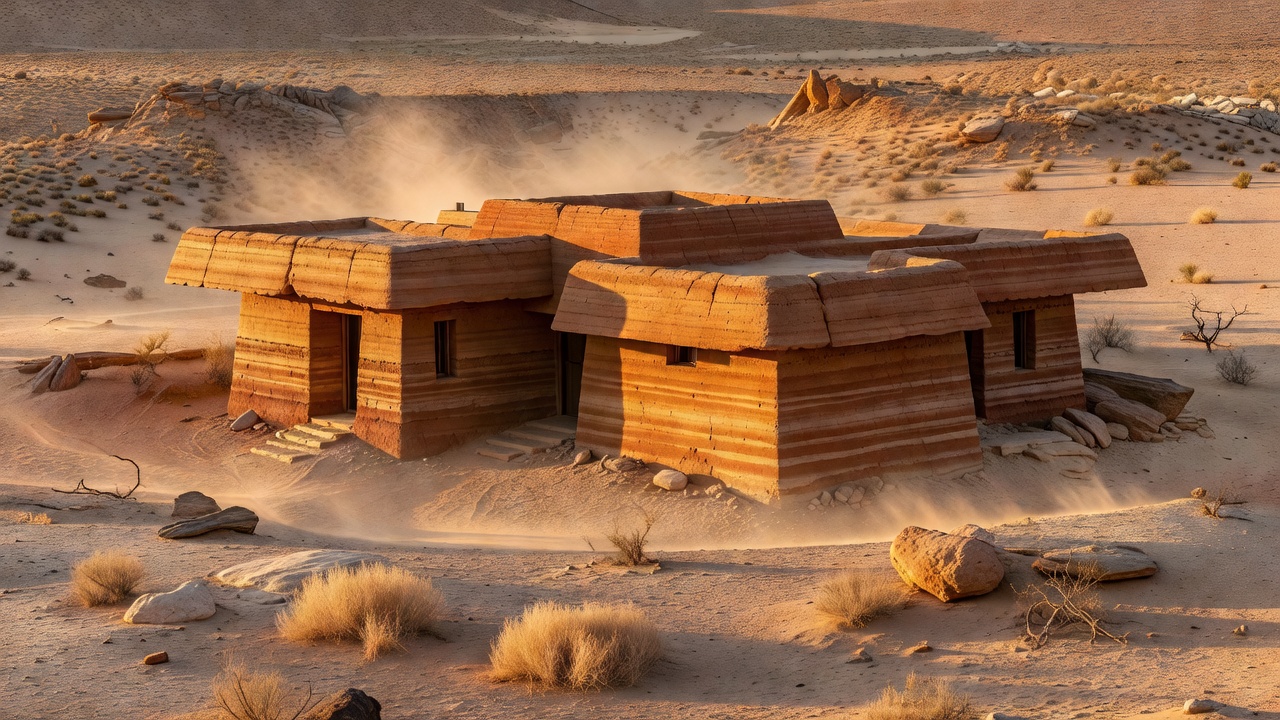
The core challenge of desert architecture is not merely keeping heat out, but managing the massive temperature swings between the scorching daylight hours and freezing nights. A structure that relies entirely on mechanical air conditioning is vulnerable; a power failure becomes a fatal event within hours. True desert oases are built on passive survivability.
Rammed Earth and Delayed Heat Transfer
Standard stick-frame homes heat up rapidly. Desert builds utilize massive walls of rammed earth, adobe, or thick stone. These materials possess high thermal mass. Throughout the day, the walls slowly absorb the relentless solar radiation, preventing it from reaching the interior. By nightfall, when the desert air turns cold, the walls radiate that trapped heat inward, keeping the occupants warm.
Material Tactical Specs
- Wall Thickness (Rammed Earth) 18 - 24 inches minimum
- Exterior Glazing (Windows) Low-E coated, max 15% wall ratio
- Roof Overhangs Calculated based on summer solstice angle
- Ventilation Strategy Cross-ventilation + Badgir (Wind Catcher)
Water Harvesting Systems
In environments receiving less than 250mm of rain annually, every drop is critical. Modern desert structures incorporate aggressive Water Harvesting Systems built directly into the roof and foundation architecture.
Roofs are pitched inward, acting as massive funnels that direct rare, torrential desert downpours into subterranean cisterns. These cisterns are kept underground to prevent evaporation and to keep the water cool. The thermal mass of the water itself is often leveraged as an internal cooling sink for the house.
Passive Cooling: The Badgir
Borrowing from ancient Persian architecture, modern desert homes often feature wind catchers (Badgirs). These tall towers capture cooler breezes above the ground-level heat haze, channeling the air downward. Often, this air is directed over an underground pool of harvested water or wet porous stones. Evaporation cools the air drastically before it is pushed into the living spaces, creating natural, zero-energy air conditioning.